Monday, 7 August 2017

Iceland -2

ÍSLAND - 2
Reykjavík - Tuesday 1st - Sunday 6th August


It was a great flight across the uninhabitable centre of Iceland flying over mountains, lava fields and glaciers. As I was on a internal Islandic flight I arrived at the domestic airport which is about a mile from the city centre so I was able to walk into town. The International airport at Keflavík is about 50 miles away, so most tourists arriving in Iceland have to gert a shuttle bus. I had time to settle in and do a food shop and get maps etc. I have a small room with a hob and a fridge. 


As I approached the town the spire of  Hallgrímskirkju dominated the landscape. Outside is a statue of Leifr Eiricsson, who discovered Vinland, the area around Newfoundland, in 930 AD. 

A walk around Reykjavík


Reykjavík, the world's most northerly capital city, is situated on the South West coast between Reykjavik bay and  the mountains. Reykjavík means smoking or smoky (reykja) and bay (vík) and was so named by Ingólfur Arnarson,  the first official  settler in  874 AD who mistook steam escaping from the underground geothermal springs as smoke. 


Once again on my first day the weather was fabulous so I made the most of it. I walked around the bay passing Sólfar (Sun Voyager) Jón Gunnar Árnason's sculpture of a stainless steel Viking boat. I also visited the fabulous new Harpa Tónlistar (concert hall) overlooking the harbour. The coloured glass facade represents the surrounding landscape and hexagonal basalt columns.


Since she started to learn Icelandic folk songs Lucy has been studying all forms of Islandic music, so when she saw that a concert was about to start she rushed off to buy a ticket. 
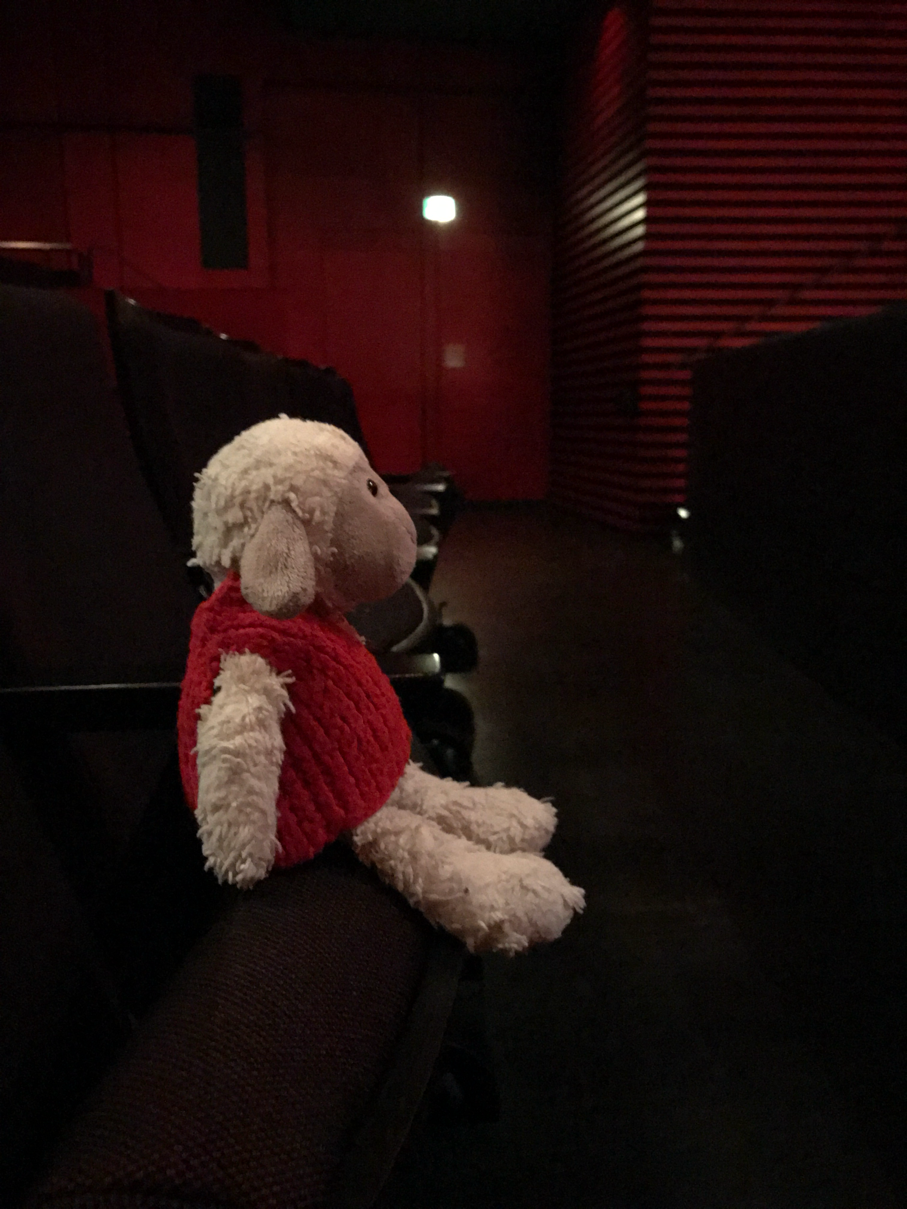

 
 It was a thirty minute trumpet demonstration of Icelandic music performed from different areas of the concert hall to show how good the acoustics are. She  assured me that they were fantastic and you can see from the  photo how engrossed she was while listening to the music.

Harbour and Coastguard Service

This year marks the 100 anniversary of Reykjavík harbour. Before it was constructed the bay was open and unprotected from the elements and the strong sea currents. There was just a sandy beach with limited facilities for ships to dock.


Iceland is a member of NATO but doesn't have any armed forces apart from the coastguard service which protects the coast and fishing grounds. The police are also unarmed. 

Whale Watching
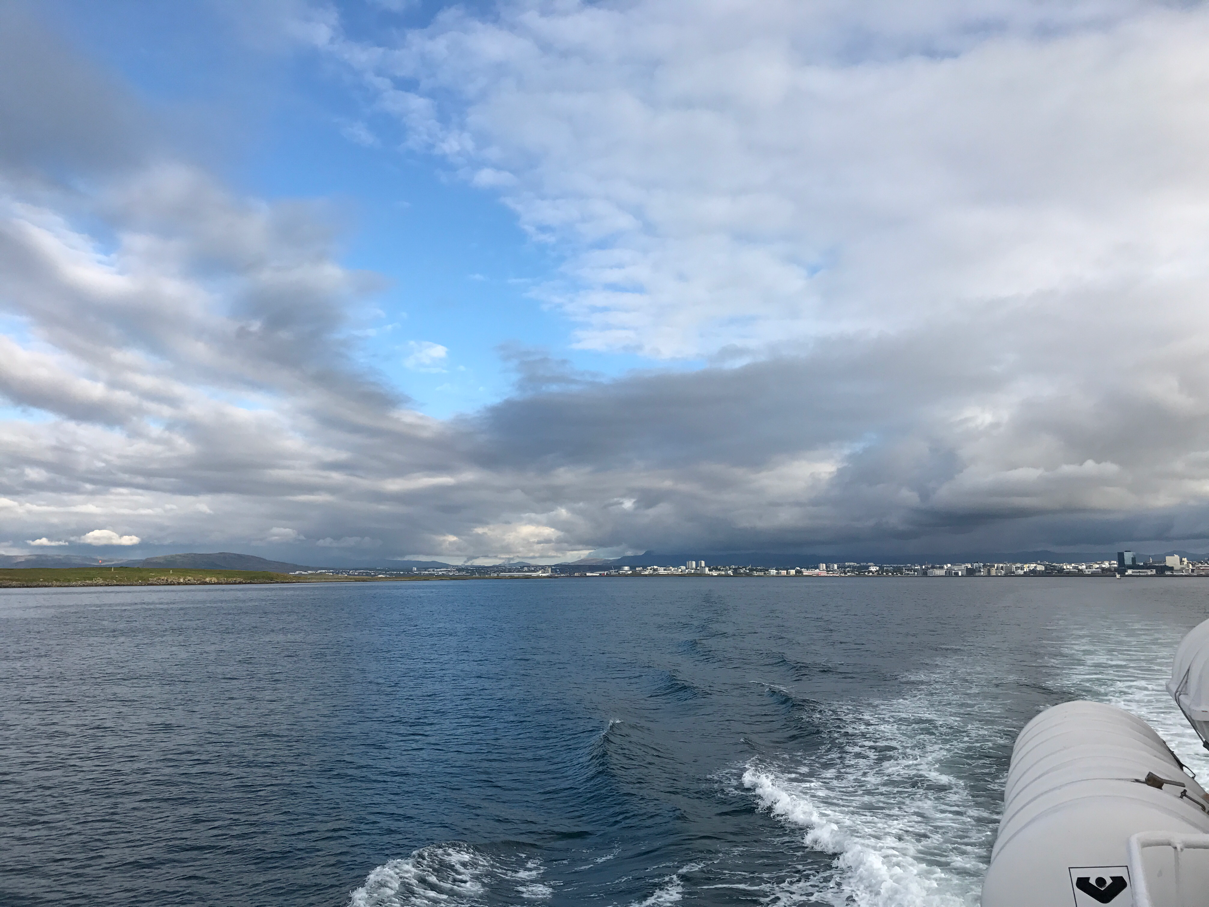


While I was in Reykjavík I did several trips into the countryside but will include these in the Sourh Iceland blog which I will post after this one. It was a fabulous evening so on impulse I booked the three-hour late evening whale watching trip. Luckily I had booked the tour run by environmentalists and they didn't get too close to the whales or disturb them. They also asked the participants not to eat whale meat, which is on the menu in many restaurants. Iceland reintroduced commercial whale hunting in 2006. It is sold as a traditional Icelandic dish, but in fact only about 1% of Icelanders will eat it and it is hunted for consumption by tourists and also exported to Japan. 


We sailed out to sea for about an hour, then they cut the engines back and went slowly around in circles looking for wildlife. We saw puffins, dolphins, gannets and minke whales. We were about to turn back when they got very excited because they had been told that there were humpback whales nearby. So we headed further out to find them. This extended our trip by about an hour so it was getting on for midnight when we got back to the harbour. A brilliant end to my first day in the Smoky Bay. 

Volcanos, Geothermal Springs and Hot Water


(This is not one of my photos) The line where two tectonic plates, the North American and the Eurasian,  meet runs diagonally across Iceland. They are drifting apart at a rate of approximately 2.5 cms per year. This is the cause of daily earthquakes and frequent volcanic eruptions, although most of these are underground or well away from the inhabited areas. It also means that the landscape frequently changes and Iceland is still growing. In terms of geological history it is one of the youngest countries in the world. I could write at length about this and the major volcanic eruptions, but will leave you to look it up. 
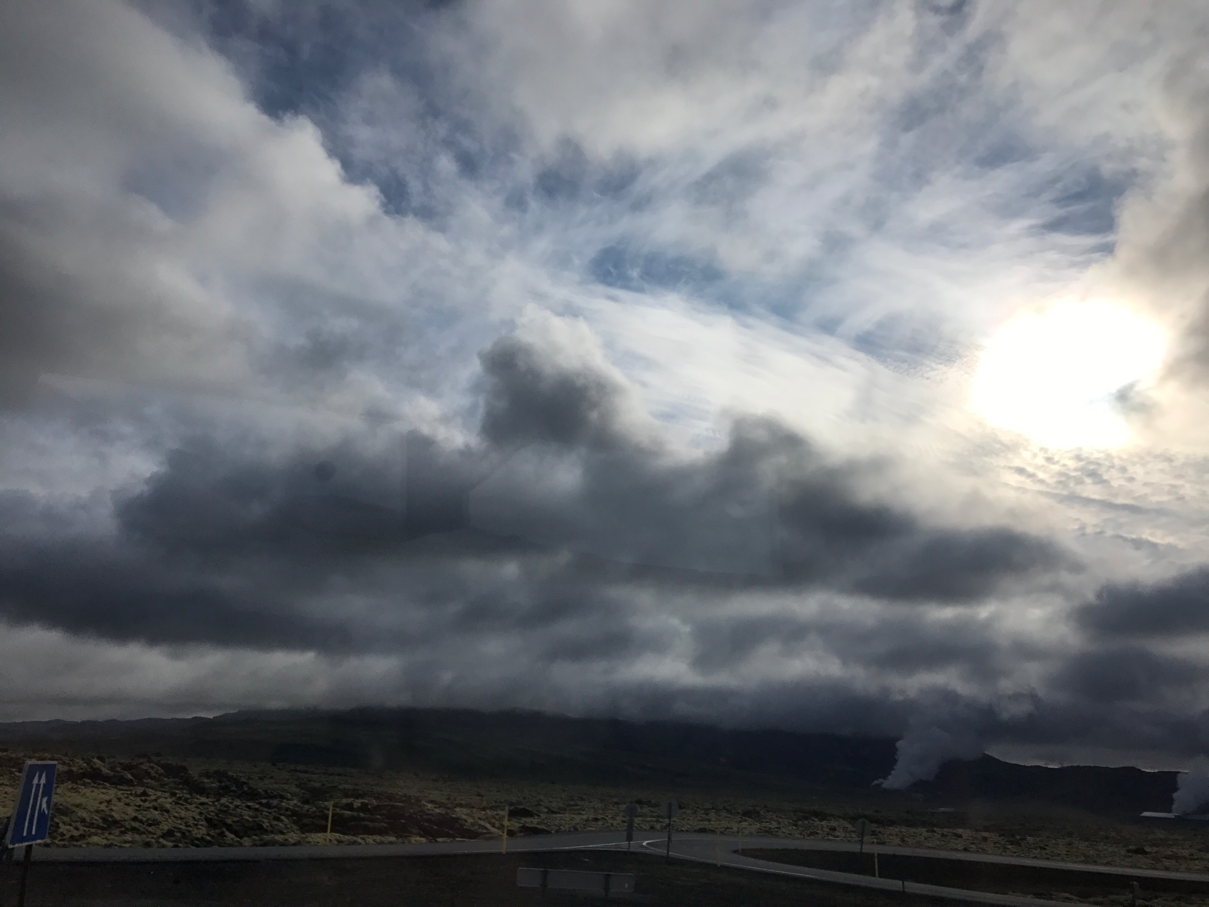


A product of  this activity are the geothermal  springs which provide hot water for Reykjavík and the surrounding area. The water is piped into the city from the geothermal plant shown above, and is also used to heat swimming pools & greenhouses enabling them to grow all their vegetables, and piped under roads in winter  to keep them ice free. It takes a while to get used to the strong  rotten egg smell of sulphur when you have a shower or wash up. 70% of Iceland's energy comes from geothermal sources and the rest from hydropower.

Tourism

Reykjavík is swarming with tourists and this year they are expecting almost 2 million visitors, three times the population. The current tourist boom started after the  volcanic eruption in 2010. The ash stopped air traffic around the world for about a week and people watching the coverage on TV saw Iceland as a place to visit.  It came at the right time for the country and helped them to recover from the 2008 economic crash. Tourism is now one of Iceland's biggest sources of income. I hope for their sake that the 'bubble' doesn't burst as in the city they have cleared huge areas to build more hotels etc. 


Icelandic Literature 
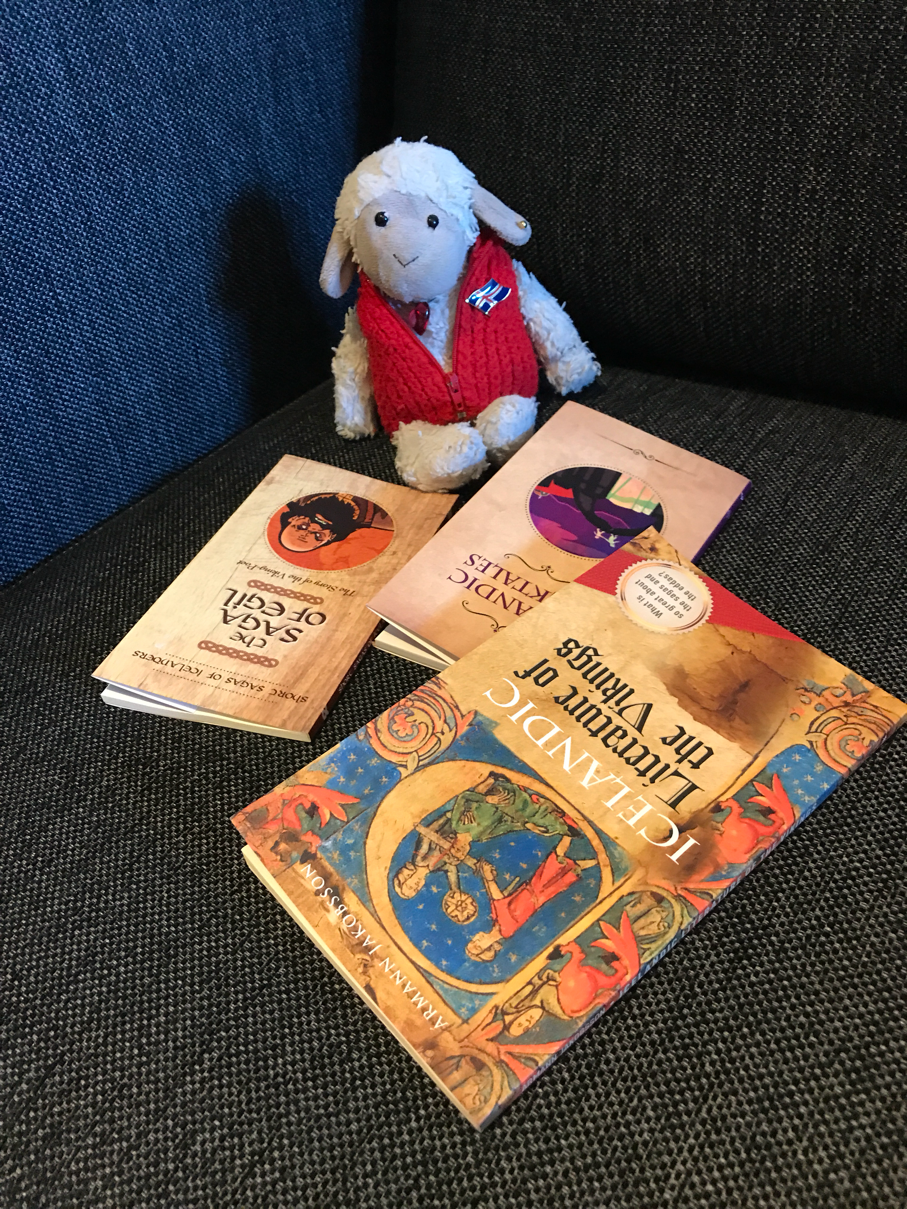


As well as Icelandic music Lucy has been reading Icelandic literature.  Iceland has strong literary tradition dating back to the 1100s and the early history of the country is recorded in the Icelandic Sagas. Many Icelanders were able to read and write and their early literature was written in Icelandic and not in Latin, which was unusual at that time. Stories about the Norwegian Vikings (The Viking Sagas) were also written in Icelandic leading to the misconception that Icelanders were Vikings. Although they came from Norway, they were in fact settlers and the early history of Iceland is always referred to as the Settlement.


Lucy has also been reading Icelandic myths and legends and has befriended some trolls. Several Icelanders, young and old, have told me that most of them believe in the existence of spirits and the 'hidden people'. The stories of Trolls are told to children to scare them so that they won't wander off into the the wilderness. Also at Christmas it is told that Santa's parents are trolls who turn children into mountains. So if children misbehave instead of getting presents Santa takes them to meet the trolls.

Museums and Galleries


I visited the National museum and art gallery and the Culture House. Again it was interesting to see how Icelandic art developed in isolation, the main  influence was from Danish artists. At the gallery I focused on women artists and the above was painted by Kristin Jónsdóttir, the first Icelandic woman to graduate (1916) from the Danish Academy of Art in Copenhagen. She returned to Iceland in 1924 and travelled around the country painting. At that time there were no roads in Iceland.  She had solo exhibitions and was the first woman artist to have work purchased by the National Gallery of Iceland. The Culture House has a wonderful reference library and a fine collection of early books, manuscripts, photographs and  religious art. I particularly liked this drawing of Þuríður Einarsdóttir dressed as a man. She was one of the few women ever to captain a fishing boat. 


Lucy was very excited as she is now on record in the archives as a user of  the reference library in the Culture House  and her name is filed away in a large bureau. On reflection she should have written her name as Lucy Annsdóttir. Icelanders do not have family names and the women add 'dóttir' and the men 'son' to their parent's (usually the father's) first name. 


Frídagur Verslunarmanna 
(Retail Worker's Holiday)

There was a public holiday while I was in Reykjavík. It was originally introduced so that traders and retail workers could have a day off during the Summer. 


I had wondered why Lucy had packed her guitar, but this is the weekend when Icelanders pack up and travel out into the countryside and to music festivals. The biggest festival is held in the Vestmanna Islands. the site of a huge volcanic eruption in 1973. The eruption was unexpected and started in January. Luckily the entire fishing fleet was in the harbour and they were able to evacuate most of the inhabitants. It lasted for 5 months when the islanders returned to rebuild their communities. One of the islands, Stursey, was formed after huge underwater eruptions and earthquakes in 1963. Young people head off to these islands with sleeping bags and guitars and spend three days partying. Someone told me that most Icelanders go at least once in their lifetime. She said it was really good and her daughter was born nine months later. 


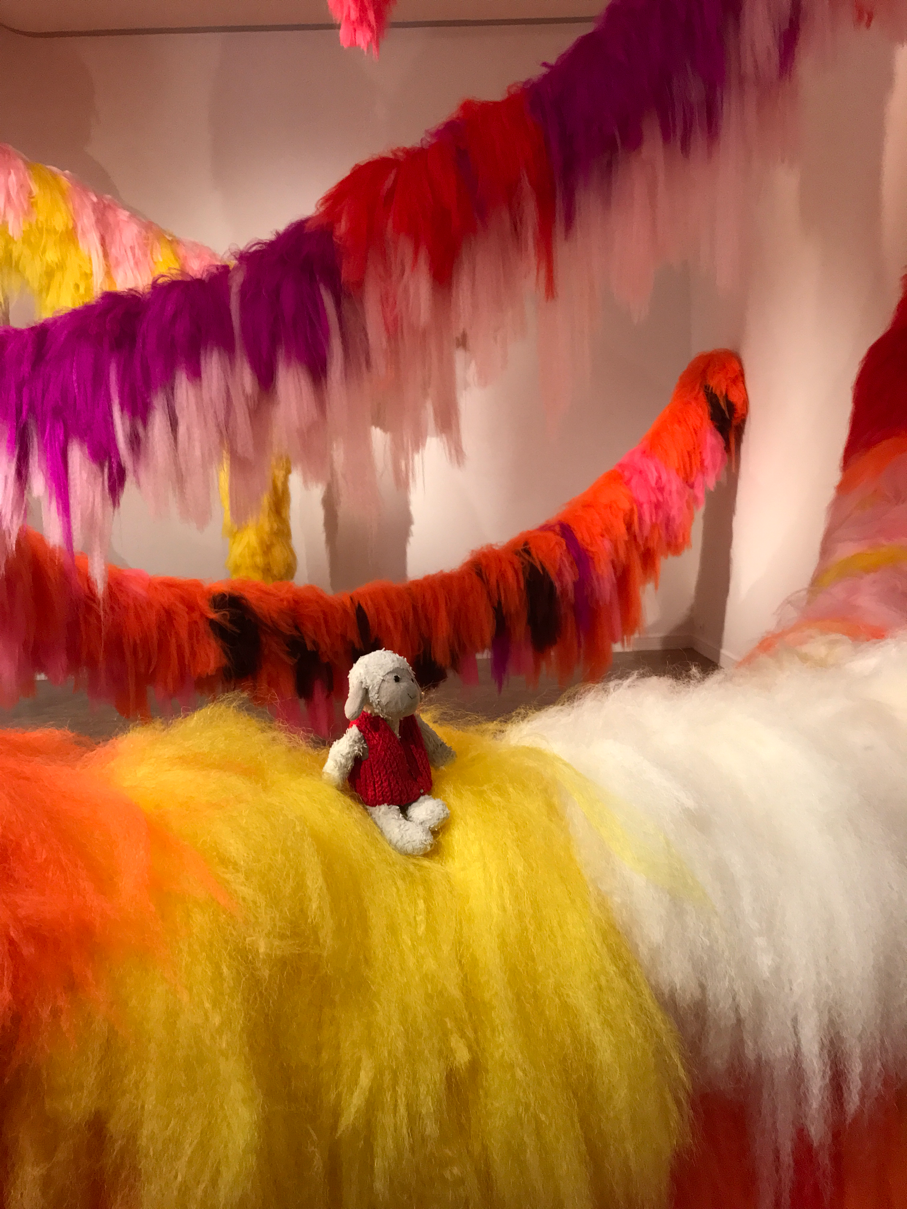
The above was Lucy's favourite picture in the Culture Museum. Another favourite of hers was Hrafnhildur Arnardóttir's multicoloured synthetic hair installation in the National Gallery. This blog has been about life and culture in Reykjavík and the next one will be about Lucy's adventures in the countryside. 


Wednesday, 2 August 2017

Iceland - 1

ÍSLAND - 1 (Iceland - 1)
Thursday 20th -  Monday 31st July 2017


This time Lucy didn't need to watch the ship's progress on the live TV feed as we had one of the few cabins facing the front of the boat, so she sat up all night as she sailed into the sunset heading for Iceland.

Seyðisfjörður - Austerland 


We docked in Seyðisfjórður in Austerland (East Iceland) at 9.30 am and were greeted by clear blue skies and snow-capped mountains. Seyðifjörður is a small town with around 700 inhabitants and is situated at the end of a 20 km fijord of the same name. It is surrounded by mountains and regarded by many as the most picturesque town in Iceland, both for its location and for the well preserved wooden buildings. For this reason it is also an artists town and many have gathered here over the years including the Skaftfell Group, who founded the Skaftfell Centre for Visual Arts. I have been so lucky on this trip to see the work by artists from so many different of schools of art. The next photo is the Tónlistarskóli  (the music school) which is next door to where I am staying. 


The check-in time for my room wasn't until 5pm but  I sent an email saying that I had arrived, and had a reply to say I could go straight there. So I got settled in and arranged for them to take out one of the beds while I was out and replace it with a sofa. It also has a well equipped kitchenette and shower room and plenty of space for my bike. 


So once again I walked around the town, went to the Tourist Information Centre for maps etc and planned the first week of my visit. My plan had always been to leave my bike near the ferry and back-pack around Iceland and I intended to leave after a couple of days and head towards Reykjavík about 400 miles away on the West Coast. But for numerous reasons I decided to stay and explore Austerland for a week or so by bus and on foot. There was an Intermational Arts Festival that week and a Blacksmith's Festival the following weekend which looked very interesting. Also, something that I haven't told many people, I fell over after I had been on the boat trip to the Vestmanna Cliffs. It was totally my fault, I was thinking about the woman who had been sick on the boat and  not looking where I was going and I tripped over a rock and crashed my chest into it, badly hurting my ribs. At the time I thought it was the end of my journey, I could hardly move and I started thinking about how I was going to get home, whether to fly, or to get the ferry back to Denmark and then catch trains to the Hook of Holland. But luckily nothing was badly broken, and I have cracked ribs several times before and just needed to rest and take it easy. And of course Dr Lucy came to the rescue and looked after me. 


She managed to get some pain killers, paracetamol, from the pharmacy in Tórshavn. It cost nearly £10 for 20 tablets and the pharmacist keeps them locked away. Lucy had to answer a lot of questions before she was given them. What and who were they for? Had I taken them before etc. She was also given a sheet listing side effects. Good job she can read Faroese.

A few facts


Iceland is roughly the same size as England and Wales but has a population of only 332,000 of whom two thirds live in Reykjavík. Only 20% of the country is able to sustain human habitation around the perimeter. There is almost no pollution so everything is clean and fresh and Icelanders are proud of the fact that you can drink the water from every stream and non-glacial river. The coastline of Austerland is indented by fjords and the valleys of the rivers that run into them are lined by steep mountains. There are hundreds of waterfalls tumbling down the mountainsides and I have done several hikes following yellow markers and cairns along river valleys and climbed up to some of the waterfalls. 


LungA (International Art Festival)

When I arrived in Seyðisfjörður it was swarming with students and the annual, week-long Art (art, textiles, music and drama) Festival aimed at students had doubled the population for the week.


 On Saturday they displayed their work and put on concerts and performances. I went to a few including 'Spirit and Matter' where they set fire to large installations and talked about influences on relationships. Don't think I have described this very well, but it was thought provoking and entertaining. 


A few more facts

Iceland is not a member of the EU but is a member of the European Free Trade Association along with Norway, Liechtenstein and Switzerland. They operate in parallel with the EU and participate in the single market. Iceland is also part of the EEA (Economic Area) as a non voting country. They  have to allow free movement, follow EU rules including new ones, pay into the budget, and accept European Court of Justice rulings. 


The currency is the Islandic Krónur and there are approximately 136 ISK to the pound. It takes a while to get your head around spending thousands of  krónur on fairly basic things. A beer in a cafe or bar costs between 1,000 and 1,500 ISK

Blaakirkjan - The Blue Church


The landscape is is so varied that all the scenes in the film, 'The Secret Life of Walter Mitty', were filmed in Iceland including those that were supposed to be in Afghanistan, Greenland and the Himalayas. Seyðisfjörður was the location used for the skateboarding sequences and the Blue Church featured in the film. 


Blacksmith for the day

Every year there is a festival at the Tækniminjassafin (Technical Museum) and they put on demonstrations and run courses. This year it coincided with my birthday and I enrolled on the Nánskeið Smiðjuhátið (blacksmithing course) using  a viking style forge at the museum. They also ran courses in photography, book binding, metal casting and knife making. 


Lucy was in her element and was much better at it than I was and she made some very fine nails. My hook was a bit pathetic, and she immediately claimed it as a viking shepherd's crook. 


There were six of us on the course including one Icelandic guy who had driven 400 miles to participate, two Swedes, two Germans and me. It was great fun and I learnt a lot about how metal behaves when it is heated ansd hammered. The teacher taught in Icelandic, some German and a little English, so at times I had to guess what to do. Of course Lucy was fine as she has mastered Icelandic and speaks it fluently. 


Tvísöngur

Another interesting day was spent walking up to the Tvísöngur, a domed sound sculpture high up on the mountainside. There are five interconnected concrete domes each having a resonance that corresponds to a tone in the Icelandic music tradition of five-tone harmony. 


With my hearing this was all lost on me, but Lucy sang an Icelandic folk song that she had learnt for the occasion and assured me that it worked perfectly.


Bike Rides

I have also been for some bike rides, at first fairly gentle ones because of my ribs, but  increased the distance as they continued to improve. In fact,  as I was writing this, I realised that they haven't troubled me once today. The weather for my first five days in Iceland was incredible, blue skies without a cloud to be seen, although it is now much greyer and damper with one or two days of rain. 


One day I cycled along the edge of the fjord until the road surface became too bad for my road tyres, so I stopped and sat for a while watching some puffins. It was so beautiful and peaceful until the occasional 4x4 came by creating a dust storm.


Tomorrow I am going to leave the bike in Seyðidfjörður and go to Reykjavík for a week or so, to explore South West Iceland. (This had always been part of the plan when I dreamt up this Viking Adventure for Lucy). We will return to collect it and get the ferry back to Denmark where we will start the long cycle ride South, along the West coast of Denmark, through Germany and on to the Hook of Holland to get the ferry back to Harwich, sometime in September. 


And on to Reykjavík

There are only two buses (morning and afternoon) during the week and one at weekends out of Seyðisfjörður and one road. So I got up early to catch the 7.50 bus. There is no bus stop sign but I thought I was in the right place as there was one other person waiting. Although when it arrived I wasn't sure if it was the scheduled bus or not.


The road linking Seyðisfjörður and the outside world is 29 km and climbs over the mountains to Egilsstaðir, the principle town of Austerland and the gateway to East Iceland. In winter the town can be cut off after a snow storm as those of you who saw the Islandic TV series 'Trapped' will have seen. I spent the day exploring the town and while I went to look at the church and the Women's Memorial, Lucy went to Gálgaklettur (Gallow's Rock) the ancient execution site. 


Then I walked a mile or so to the tiny airport to catch a plane across the centre of Ísland to Reykjavík.


Sunday, 23 July 2017

Faroe Islands - 2

FÆRØERNE - 2
FAROE ISLANDS - 2
Monday 10th - Wednesday 19th June 2017


More of Lucy's adventures on the Faroe Islands

For the second part of the Faroe adventure I bought a   travel card so that I could hop on and off public transport and explore further afield. In total Lucy visited eleven of the eighteen island travelling  on buses, ferries, small boats and on foot,  She sat on the  most northerly point knowing that there was nothing between her and the Arctic. Minibuses on the smaller islands connect with the two main bus routes and ferries and the driver phones through to say you are on board and waits until the bus or ferry arrives. The Faroese have an obsession with tunnel building and aim to link all the islands. Some of them are wide new tunnels over 6 km long on the sea bed between islands and others are dark single track ones with passing places cutting through the mountains. They are currently building a new one under the sea from Streymoy to Esturoy which will have a roundabout in the middle of it. One day Lucy had the front seat on a bus and this was her view as we went through one of the new tunnels. 


Lucy went for a Hike


All the guide books give details of hikes across the islands  to look at birds, light houses,  coves, cliffs, little villages or historical sites and I did two or three of the easier ones. One day I got the bus to Kirkjubøur, the site of St Magnus Cathedral built around 1300 from rock and stone, and then walked back across the hillside climbing to a height of 600 metres from sea level and back down to Tórshavn. Lucy went on ahead while I looked at the ruins of the church and the village. She waited for me on a chair made of rocks that  has marked a meeting place for national speeches and patriotic songs since the 1800s.


It was about ten miles and the path was very steep and rocky and quite difficult to find at times. Although it was listed as an easy hike, it was just about my limit, but the views were fabulous and well worth the effort. 

The English invade Tórshavn 

I had only met five or six English people since I arrived here, so it was a surprise when I walked through the Tinganes to find it swarming with English as there was a cruise ship in town. I chatted to a couple of sisters and learnt that they were only here for two or three hours and this was their second stop since they had left Tilbury Docks and they were going to Iceland that night. As it was a Sunday most places were shut, so they were crowded in one of the few cafes that was open. The restaurants open at four on a Sunday but they were well gone by then. It was a bit embarrassing as a lot of them were moaning about the prices and one man said, "I usually do. Mediterranean Cruises, this isn't the same is it?" Someone else asked how far it was to the art gallery and the reply was that as the town buses don't run on Sundays they would just have time to get there, run  round it and back before their ship left.

Listasavn Fóroya (Art Gallery)


I spent a very wet Saturday in  the Art Gallery. Because the Islands are so isolated the artists were not influenced by other European schools of art and developed independently, mainly painting local scenes, portraits and the islands. 


Nólsoy painted by Stefan Danielsen ((1922-97) who spent most of his life on this island where he was born.

Churches and Church Art

The Lutheran church is very strong and powerful on the islands and the churches are in perfect condition. There are small ones  in every village, often on a headland overlooking the sea that have been rebuilt on the same spot over hundreds of years, 


This church is on the most northerly point at Viðareiði om the island of Viðoy and contains a collection of altar silverware donated by the British government to thank islanders for their hospitality after a British brig was wrecked in 1847. 


There are also several  beautiful modern churches in the towns like the Vesturkirkja in Tórshavn with a copper tower built in the form of a pyramid, which caused much controversy when it was built in 1975. Being Lutheran they are very plain inside mostly painted white with a fabulous altar painting and often a boat hanging from the ceiling to remember lives lost in sea tradgedies. I chatted to someone from the church in Klalsvik and he invited me to look at the wonderful circular, wood relief plaques in a meeting room downstairs. There were ten in all telling the story of Christ. 


More church art was on display in the National Museum and the fabulous very early carved pew ends were described as the 'jewels' of the islands. I took so many photos of these and it is difficult to decide which one to include here. But I have chosen the meeting of the Virgin Mary and Elizabeth. 


The cliffs at Vestmanna

I had to wear a hard hat but Lucy sailed around and into the vertical free-standing cliffs wearing her Viking helmet and imagining that she was one of the first people to see these 600 metre high cliffs which are the nesting place for thousands of birds. As we sailed along the base of the cliffs we saw puffins and razorbills and went behind the cliffs and into dark grottos. 


It was a two hour boat trip and was fairly choppy when we returned across open water to Vestmanna. The woman next to me threw up over the side of the boat but luckily it didn't blow onto me. 


Krígssavnið (War Museum)

When Lucy visited the Krígssavnið on Vágar she met Robert Shrive, who was visiting from England. His father was stationed on the island during WW2 and married a Faroese bride. Robert was with his Faroese cousin and although he grew up in England he spent his holidays on the Islands and kept in contact with his Faroese relatives. I had a coffee with the two men and they told me some interesting stories about their family. The photograph below shows Robert"s father and grandfather during the war.


The Faroes were occupied by Britain from 1940 after Germany invaded Denmark and at one point there were 8,000 British troops on Vágar and 2,000 local inhabitants. While they were there the British troops  drove on the left and built an airport. This is still the International airport which is about 30 miles from Tórshavn and on a different island. Until the new tunnel was built everyone arriving from overseas had to make a ferry crossing to get to the capital.

Noðlandahúsid, The Nordic Centre


This was a great place to spend a wet day, to have lunch (they do a really good buffet brunch, brunj) and catch up on emails as there was good wifi coverage.  It is an arts centre, a bit like the mac in Birmingham, with a gallery, cafe, theatre, dance studio and activity rooms. The stone entrance is Norwegian, the chairs are Finnish, the wooden walls are Swedish, the glass and steel are Danish, the roof construction is Icelandic and the grass roof is Faroese.


Lucy's last day in Tórshavn 

I spent the day walking around Tórshavn and  climbed up to the Western side of the town where there are some fabulous houses dating from the late 1800s. 
There is also a little botanical garden with 148 species of flora found on the Islands including viviparous sheeps fescue. Although there are no native trees on the Faroes the islanders,especially in Tórshavn, plant trees in the town and are very proud of their gardens. Tora who owned the annex where I stayed frequently watered her garden with a hose, even after a day of rain.


While I was doing this Lucy gathered up herFaroese  memorabilia and went off to post it home. She was very pleased that she found the budget shop (sheep) and bought envelopes and other things at a fraction of the price that I had previously paid. 


So Lucy's three week stay on these amazing Islands came  to an end and she sailed to Iceland  to start another stage of her Grand Viking Tour.